
a little tenderness
radical intimacy in the manosphere

I made dinner for some friends the other weekend and whilst I was chopping and stirring and simmering and all the rest, they were talking about the new Louis Theroux documentary. Both Hugh and Ben agreed that the men interviewed, all of them prominent members of the online manosphere movement, were probably definitely secretly gay.
There is a tipping point, where obsessive hypermasculinity starts to look a little suspect - the more the incels disrespect women who don’t want to date them and hero worship the muscular alpha males on the podcasts, the more I wonder whether Hugh and Ben might have a point. I watched Inside The Manosphere, intrigued as to what Theroux would make of the men, how far his critique might go and what (if anything) his investigation might uncover. I have some thoughts.
Hypocrisy abounds. Take the theory they cling to that the modern world is a matrix, programming and subduing us into working 9-5 jobs so that we’ll never make as much money as the 1% elite. Included in this matrix is the idea that masculinity is being repressed, that feminism and gay rights threaten the ‘natural’ order of the patriarch ‘provider’ in society. These men think they have the answer and seek a return to traditional values, all whilst surrounding themselves with the most egregious icons of modern wealth: girls in bikinis, fast cars and online notoriety. I won’t dwell on the fact that the term matrix is in reference to the film The Matrix, along with the idea of taking the red pill which they’ve also coopted; a film directed by two trans women and widely understood as a trans allegory.
What’s hypocritical is that in the alternative world they inhabit, they’ve just created another matrix. They are now the 1%, controlling an international following of frustrated and lonely teenage boys, promoting and selling financial tips, fitness regimes and dating advice. Theroux follows their financial plan in his documentary (he loses all the money he invests), and the less said about their dating advice the better, because of course these men know what women want better than women do (that’s to be dominated and controlled).
They call out women who do sex work as “disgusting” and describe porn as “loser shit”, but have profit shares in OnlyFans agencies. They lie consistently through the documentary, about when they’re doing their own filming and where they’re going to post it. The worst offender is influencer Harrison Sullivan, who uploads content under the puerile handle HSTikkyTokky. He barks about how the Netflix documentary will be manipulated and edited to show a convenient bias, whereas he is raw and unedited, livestreaming Theroux’s interview as it’s conducted to prove he has nothing to hide; but when Theroux asks about the criminal convictions Sullivan is wanted for in the UK, HSTikkyTokky quickly gets all decliny-winy.
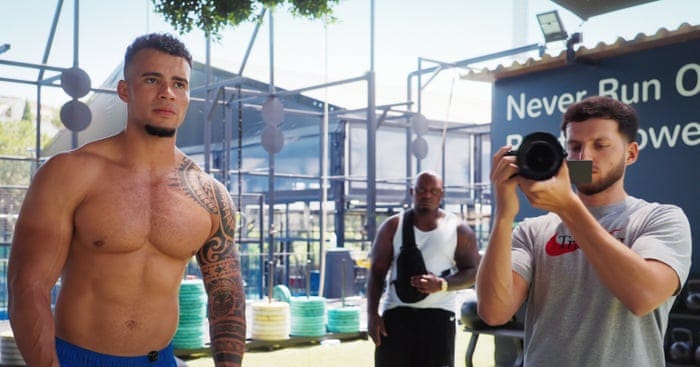
And they’re also not nice people. I didn’t go into it with this judgement, and there were moments I felt I could have been persuaded otherwise. For example, when Theroux goes to the home of Justin Waller and speaks to his wife Kristen about their one-way monogamous relationship (where the man can sleep around but the woman can’t), she has a lot to say in defence of their lifestyle: we stay in our own lanes, that’s how it works for us. Maybe there isn’t anything inherently wrong with two adults consenting to a relationship, even if it is one with what I would consider to be a toxic power imbalance. If it makes them happy, then fine I guess?
But just as soon as I’ve maybe found some, uh, tolerance for these macho men, they lure an older man from a gay dating site to a meeting spot and then beat him up on a livestream. Literally a criminal offence. It’s insane and terrifying the power they wield and the influence that has on young men online.
It’s easy from the outside to mistake the manosphere for an ominous and powerful community. They think they’ve made a community, but it is the opposite, it’s a hierarchy. The swathes of lonely and frustrated men on the internet who have pedestalled these influencers are so deluded by their god complex, they will readily agree when Justin Waller tells them to their faces they are too unattractive to get women. Crazy!
And therein lies a further hypocrisy. As Sophie K Rosa puts it in her book Radical Intimacy, “the tragic irony of incel philosophy is that the sexual order in which these men experience themselves as undesirable is the same culture of discrimination and objectification they are reiterating by demanding their ‘right to sex’ with only ‘fuckable’ - young, conventionally attractive, white, non-disabled, cis - women.” It’s the same as that Middle Ground episode where a conservative teen tries to claim he isn’t at an advantage by being a man because men are more likely to commit suicide, have dangerous jobs, fight in wars. The liberal mum’s simple response: “and who set that system up?”
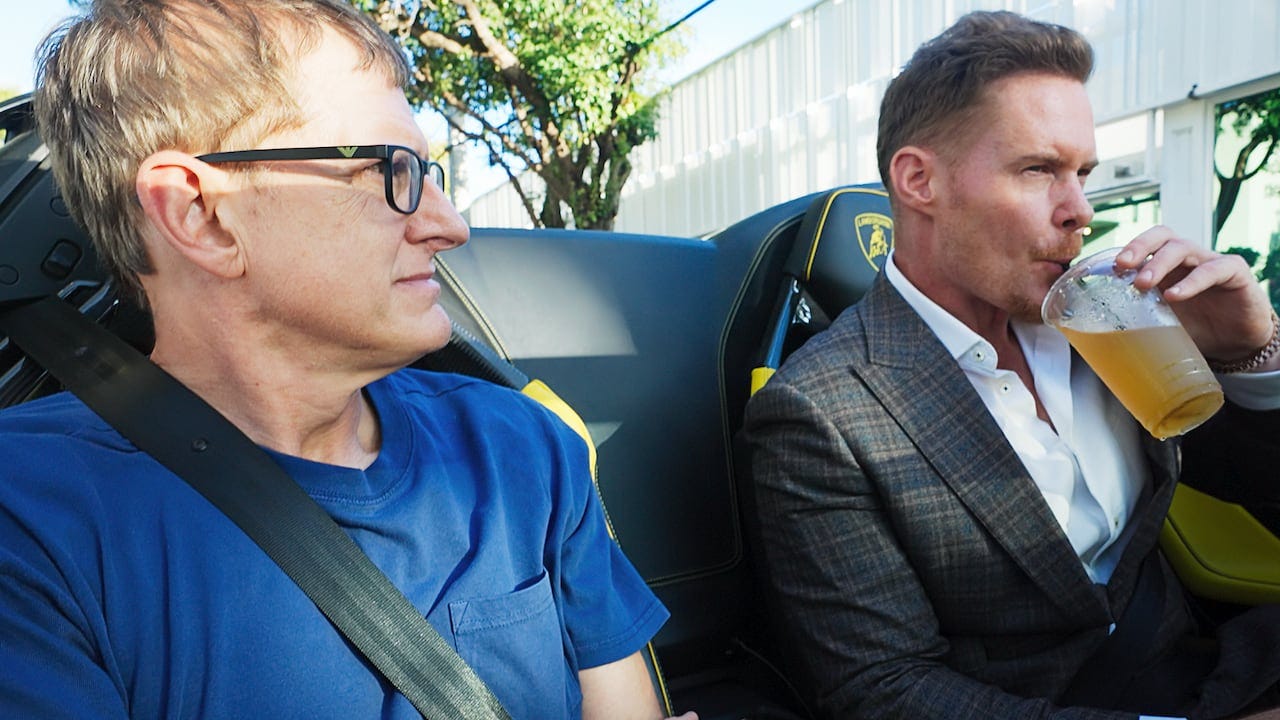
Radical intimacy is exactly what I propose these men require. They need someone to show them they’re not unloveable, to tell them that it’s not masculinity that’s being labelled as toxic these days, it’s that striving for masculinity is in and of itself toxic, not just to women but to men too. The world that has let these men down is the same world that liberalism seeks to redefine, yet they can’t see that it could benefit them too.
I think we need to show them.
Our intimate lives are the source of our heaviest sufferings and most relieving joys, and present ardent opportunities for transformation. Our intimate experiences, feelings and longings give our lives meaning. They can give us reasons to stay alive. The reality, though, is that intimacy in the world as we know it is often lacking… Our normative modes of relating and living often fall short - both in meeting our intimate needs and in allowing us to form and build the kinds of relationships that could support our struggles for a future of abundance, rather than recreate the privation of the status quo. - Sophie K Rosa, Radical Intimacy
We need to help them rid themselves of the shallow, superficial validation they find in subscribers and clout chasing. Perhaps someone could take Harrison Sullivan on a beautiful hike in the mountains, or someone could listen to Andrew Tate divest himself of his feelings around his abusive father. They seem to need reminding that they have the agency to choose not to live in a violent world where everything revolves around money making and where the perfect partner exists as a service, a function, a use rather than a need.
“The principal horror of any system which defines the good in terms of profit rather than in terms of human need is that it robs our work of its erotic value, its erotic power and life appeal and fulfilment.” So says Audre Lorde in her essay Uses of the Erotic: The Erotic as Power, an instructive to women to harness the power of the erotic in their lives to escape the patriarchal oppression “which values this depth of feeling enough to keep women around in order to exercise it in the service of men, but which fears this same depth too much to examine the possibility of it within themselves.”
But what if they did? That is the answer, surely. That’s what they’re missing; the erotic, the intimate, the tender.
Once we begin to feel deeply all the aspects of our lives, we begin to demand from ourselves and from our life-pursuits that they feel in accordance with that joy which we know ourselves to be capable of. Our erotic knowledge empowers us, becomes a lens through which we scrutinize all aspects of our existence, forcing us to evaluate those aspects honestly in terms of their relative meaning within our lives. - Audre Lorde, Uses of the Erotic: The Erotic as Power
I mean to use this sexually, because I can’t believe these men have ever truly understood the joy of a sexual connection, have ever truly known sexual pleasure, but also in a wider sense: their morals, their attitude. There’s moments in the documentary where Theroux tries to touch on this, asking Harrison how he can live with the moral failings of his life. Unsurprisingly, Theroux fails to get through to him. “If I’d just done good things,” he says “I would never have really blown up on social media.”
This from Elle Hunt in The Guardian: “When Theroux asks Sullivan why he does not try to be a good person and lift people up, he responds with a mix of defiance and fatalism: “I’m not living for other people, I’m living for myself.” Watching him be puppeteered by his audience, it’s at best disingenuous. But even if he believes it to be true, it’s also not much of a life.”
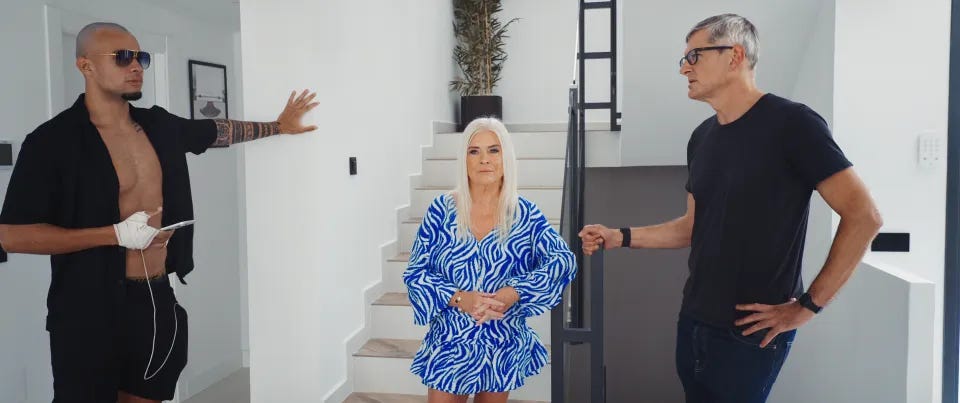
The documentary is ultimately a bit of a dud. Theroux pokes fun at the men, tries to undermine their totalised and reductive world view, but I agree with the wider consensus that he missed a trick by not speaking much to the women involved. The scant moments where he does are the most illuminating in the whole film; when girlfriend Angie speaks out about her wishes, or when assistant Icy is literally silenced by the men in real time, or best of all, when Harrison Sullivan’s mum Elaine treats him like the little boy he really still is.
They’re not secret gays, I don’t think. They’re just greedy little boys. And the world has always been run by greedy little boys of one sort or another. I think they should all go to therapy, touch some grass, touch themselves, say sorry. Until then they can keep their fantasies of alpha-male dominance; I’m sticking with Lorde and Rosa’s radical intimacy.
And if anyone wants a hug, my arms are open.
Louis Theroux: Inside The Manosphere is available on Netflix.
Quotes from Sophie K Rosa’s Radical Intimacy: pg 51, pg 7.
Audre Lorde’s ‘Uses of the Erotic: The Erotic as Power’ is published in the essay collection Sister Outsider.